

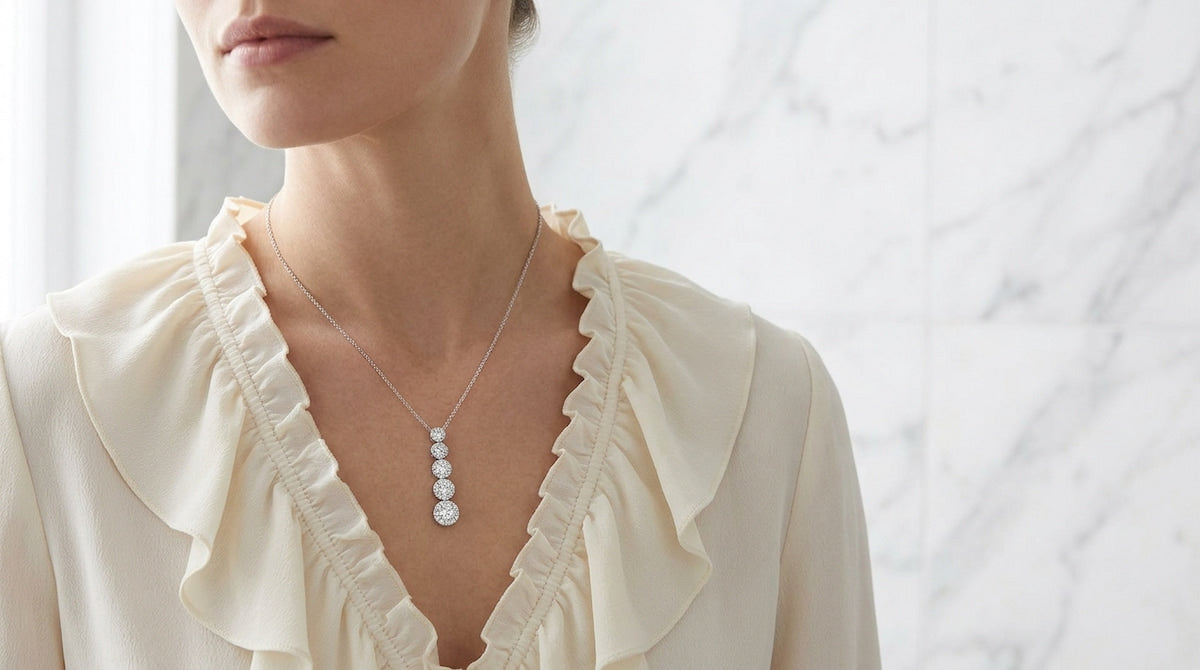
The word on the tag matters less than the person you're buying for. Still, choosing between a necklace, pendant, or charm as a gift gets easier once you know what each one is, because the three names get used loosely and it's easy to end up with the wrong piece.
Necklace, pendant, or charm: a quick way to decide
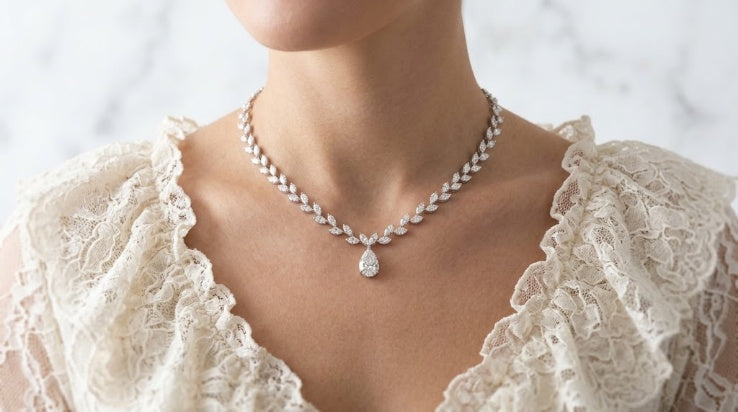
A necklace is the base piece worn around the neck, a chain or cord that can be worn on its own. A pendant is a single ornament that hangs from a chain. A charm is a small, usually sentimental trinket, often collected over time and attached to a bracelet (less often a necklace).
In everyday use these words blur, and a single charm on a chain can look exactly like a pendant. If you want the precise line between the first two, we cover it in our guide to the difference between a necklace and a pendant.
For a gift, the practical split is simpler than the vocabulary:
- Pick a necklace when you want a complete gift that's ready to wear straight from the box.
- Pick a pendant when you want the ornament itself to carry the meaning. Check whether it comes on a chain, or pair it with one.
- Pick a charm when they already collect charms and have a bracelet or necklace to hang it on.
That last condition is the one people skip: without something to hang it on, a charm sits in a drawer.
Matching the necklace, pendant, or charm gift to the person
Start with their everyday style, not with what looks impressive in the case. A bold statement piece for someone who only wears tiny, delicate jewelry is the most common gifting mistake.
For a partner, you usually know their taste well enough to go sentimental. A pendant that points to something between you tends to land well. For a mother, a classic she can wear daily is often the safer choice, something delicate enough to leave on. For a friend, the stakes are lower and the range is wider: a simple pendant or, if they collect them, a charm.
Two quick cases make it concrete. For a new mother, a simple pendant on a fine chain works well: it survives daily life, and a small motif that nods to the baby carries meaning without being fussy. For a close friend whose birthday you never miss, a charm can be the better call, provided they already have a bracelet to build on, because you can add one each year and the piece grows with the friendship.
Occasion nudges the scale too. A milestone like an anniversary or a big birthday can carry a piece that stands on its own, while a small "thinking of you" gift is happier kept light. For specific ideas by occasion, our roundup of timeless jewelry gifts is a good place to start.
How budget shapes the choice
Budget tends to decide scale before it decides style. A few things move the price most:
- Stone size: carat weight has the biggest effect on the price of a diamond piece.
- Gold karat: 18K contains more pure gold than lower karats, so it costs more.
- Chain weight: a thicker or longer chain uses more gold.
A delicate everyday piece, like a fine chain or a small pendant, sits at the gentler end and usually gets worn constantly. A statement piece, larger or set with more stones, sits higher and tends to come out for occasions. Neither is better by default; a piece worn every morning can mean more than one that lives in a box.
For metal, 18K yellow gold has a warm, classic tone and 18K white gold a cooler, brighter one. Go with the tone they wear most rather than guessing at a new one. Browsing the necklace collection side by side gives you a feel for how different styles and scales compare.
How to personalize a jewelry gift
A few ways to make the piece clearly theirs:
- Initials, which turn a plain pendant into something unmistakably theirs.
- Birthstone-inspired pieces, which tie a color to a birth month.
- A meaningful motif, like a small star, a heart, or an animal they love.
One judgment call decides whether this works: some people love jewelry that says something, and others prefer it quiet. A monogram delights one person and feels too on-the-nose to the next, so lean on what you know about their taste. And confirm the details that can't be undone, spelling above all, before you commit.
A quick checklist before you buy
- Match the metal tone and scale to what they already wear.
- Decide between a ready-to-wear piece and something to add to a collection.
- Check whether a pendant comes with a chain.
- Confirm any personalization detail, like spelling or a birth month.
If you're still torn, a simple necklace or a single pendant is hard to get wrong, and you can browse our pendants if you want the ornament to lead. Keep the tone and shape close to their everyday style, and the label on the tag stops mattering the moment they put it on.

اترك تعليقًا
This site is protected by hCaptcha and the hCaptcha Privacy Policy and Terms of Service apply.