

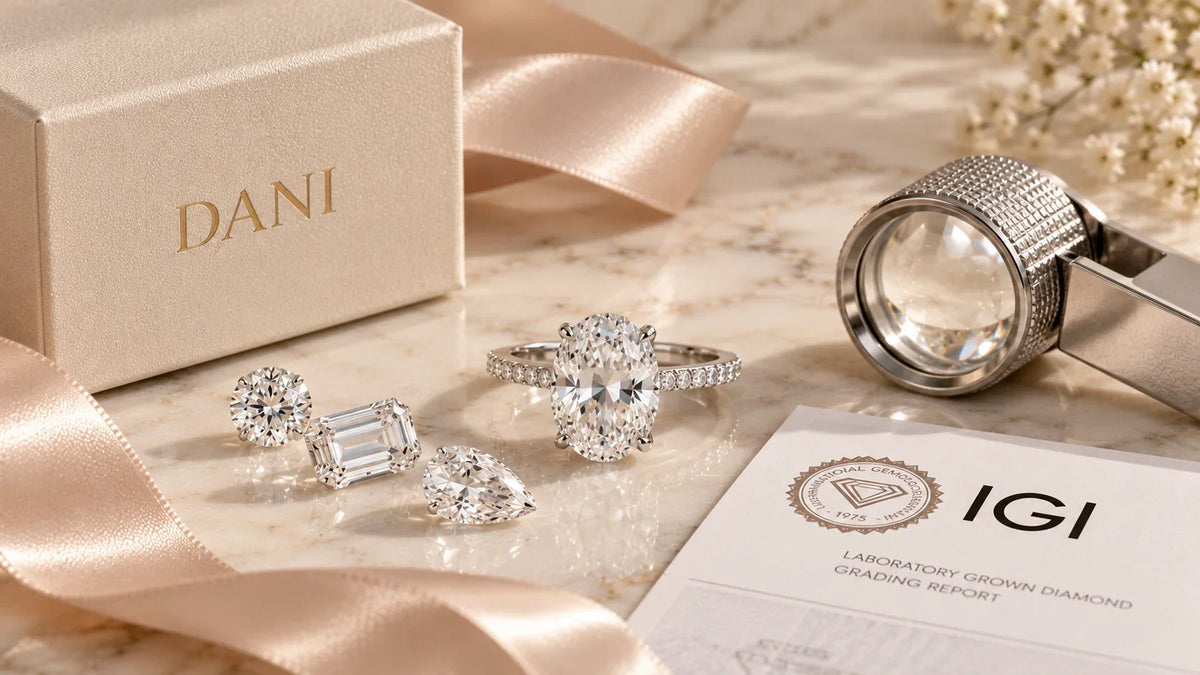
Yes, lab-grown diamonds are real diamonds, and the short answer to almost every follow-up question is simpler than the marketing around it suggests. A lab-grown diamond is chemically, physically and optically the same as a mined one. The difference is where it came from and, usually, what it costs.
Still, the same ten questions come up again and again once people start shopping. Here are direct answers to each, from whether a jeweler can spot one to how they are graded after the 2025 changes.
Are lab-grown diamonds real diamonds?
Yes, lab-grown diamonds are real diamonds. A lab-grown diamond has the same chemical composition as a mined one, pure carbon arranged in the same crystal structure, with the same physical and optical properties. The only real differences are origin (grown in a lab rather than formed underground) and usually price. This is not just a seller's framing. In 2018 the US Federal Trade Commission revised its Jewelry Guides and removed the word "natural" from its definition of a diamond, on the grounds that lab-created stones have essentially the same optical, physical and chemical properties as mined ones. So when buyers ask whether lab diamonds are real diamonds, the answer is built into the definition.
Are lab-grown diamonds the same as natural diamonds?
In every way the material matters, yes. A lab-grown diamond and a natural diamond share the same hardness, the same brilliance, the same fire, the same chemistry. Set them side by side and you are looking at two diamonds, not a diamond and an imitation. What separates them is origin and, in most cases, price. The FTC still requires sellers to disclose a lab-grown stone clearly, using a qualifier such as "laboratory-grown," "laboratory-created," or "[maker]-created," so a buyer always knows which one they are holding. For the longer background on how these stones moved into fine jewelry, the rise of lab-grown diamonds is a useful read.
How are lab-grown diamonds made?
Lab-grown diamonds are made with one of two methods, HPHT and CVD. HPHT (high pressure, high temperature) mimics the intense heat and pressure found deep underground. CVD (chemical vapor deposition) instead builds the crystal up layer by layer from a carbon-rich gas at low pressure. Either route produces diamond, not a stand-in for it.
Can a jeweler tell a lab-grown diamond from a natural one?
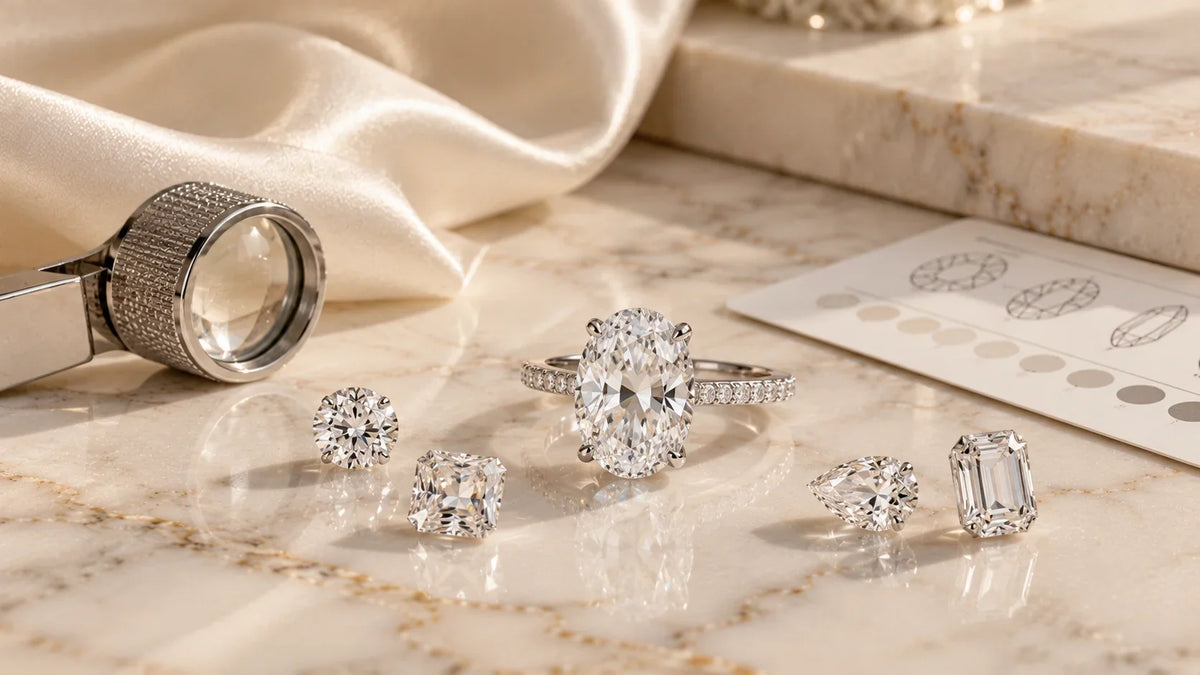
Generally no, a jeweler cannot tell a lab-grown diamond from a natural one by eye. Because the two share the same structure and the same optical behavior, the sparkle, clarity and color give nothing away to the naked eye, or even under a standard loupe. Telling where a stone came from is a separate question from telling what it is. Identifying origin reliably takes specialized laboratory equipment that reads the tiny growth patterns and trace elements left behind by how the crystal formed. That is lab work, not a quick check at the counter, which is exactly why independent grading reports exist.
Do lab-grown diamonds pass a diamond tester?
Yes, lab-grown diamonds pass a standard diamond tester, because they are real diamonds. Most common testers work by measuring how a stone conducts heat, and a lab-grown diamond conducts heat like any diamond, so it reads as diamond. Keep two limits in mind, though: a basic heat tester cannot tell diamond from moissanite, and no tester tells you where a stone came from. A simulant such as cubic zirconia is a different material and fails that same test, which is one of the practical gaps this comparison of lab diamond and cubic zirconia spells out.
Are lab-grown diamonds graded and certified?
Yes, lab-grown diamonds can be graded and certified by independent gemological laboratories, and in 2025 the two biggest labs split on how. The International Gemological Institute (IGI) continues to grade lab-grown diamonds on the full 4Cs, cut, color, clarity and carat, using the same scales it applies to natural stones, per its statement of July 16, 2025. GIA took a different route: effective October 1, 2025, it no longer assigns a D-to-Z color or FL-to-I3 clarity grade to lab-grown diamonds, and instead issues a two-tier descriptive assessment of "Premium" or "Standard." So the report you receive now depends on which lab graded the stone, which is worth checking before you compare two pieces.
Do lab-grown diamonds last forever?
Yes, a lab-grown diamond is built to last a lifetime. Diamond, whether grown in a lab or mined, scores 10 on the Mohs scale, the very top of the hardness scale, and it is highly scratch-resistant. That hardness is why a diamond stands up to daily wear in a ring better than almost any other stone. That said, hard is not the same as indestructible. Hardness measures resistance to scratching, not resistance to a sharp knock, and a diamond can still chip or fracture if it is struck at the wrong angle. Treat it as durable and long-wearing rather than unbreakable, and it will outlast most things you own.
Why are lab-grown diamonds cheaper?
Lab-grown diamonds are cheaper mainly because they are faster and more predictable to produce than finding and mining a natural stone of the same size and quality. A mined diamond carries the cost of exploration, extraction and a long supply chain built around scarcity. A grown diamond skips most of that, so a lab-grown stone typically costs less than a mined one of comparable size and quality. For many buyers, this is the main trade-off: the same look and the same material for less, in exchange for a stone that is no longer rare. Whether that trade works depends on what you want the stone to do.
Do lab-grown diamonds hold their value?
No, lab-grown diamonds do not generally hold their value. Resale value is low for all diamonds, often well below the retail price, and lowest for lab-grown, where prices have fallen as production has grown. That makes any diamond a weak financial investment. The better way to think about the purchase is for wear and enjoyment: choose a piece because you want to look at it and wear it every day, not because you expect it to appreciate. Judge it the way you would judge anything you plan to keep and use, by how much you like living with it.
Are lab-grown diamonds more ethical?
It depends on what you weigh most. Lab-grown diamonds let you skip the mining process, which is the main reason many buyers see them as the more ethical choice. There is a fair counterpoint worth stating plainly: producing a diamond still uses energy, sometimes a significant amount, so "lab-grown" does not automatically mean "impact-free." The right framing is a trade rather than a clean win. You avoid the impacts tied to mining, and you take on the energy cost of production instead. For buyers who care most about origin and traceability, that trade often lands in favor of lab-grown, but it stays a personal judgment call, not a settled fact.
Where to buy lab-grown diamonds in Dubai
You can buy lab-grown diamonds in Dubai both online and in person at Dani. The full lab-grown diamond collection spans everyday pieces to statement designs, set in 18K white, yellow and rose gold. If you have a category in mind, the lab-grown earrings and lab-grown rings are a natural place to start. A few designs show the range: the Classic Grace earrings, the Classic pendant and the Classic Elite ring each pair lab-grown diamonds with white gold in clean, wearable settings. To compare stones under real light before you decide, visit a Dani boutique and ask to see the lab-grown pieces side by side.
The bottom line
So, are lab grown diamonds real? Yes, down to the chemistry, and the main things that set them apart from mined stones are origin, price and how they are graded since the 2025 changes. They are hard-wearing, they pass a diamond tester, and they can be independently graded; if a stone comes with a report, check which lab issued it. What they are not is a financial asset, so buy one to wear and enjoy, not to resell later.
To see the difference up close, shop lab-grown diamond jewelry online or visit a Dani boutique.

Leave a comment
This site is protected by hCaptcha and the hCaptcha Privacy Policy and Terms of Service apply.